Q2 Commercial Market Pulse Report

This market report reviews current leasing momentum, investor activity, and pricing signals across key commercial property segments. While every local market has its own story, the broader commercial real estate environment continues to be shaped by selective tenant demand, disciplined capital, and a renewed focus on asset-level fundamentals.

Owners and investors are looking for clearer signals before making major decisions. Leasing activity, tenant credit, renewal behavior, financing availability, and comparable sales all carry more weight in today’s market. The result is not a lack of opportunity, but a more careful approach to identifying which opportunities are worth pursuing.

Leasing momentum varies by asset type

Leasing activity continues to depend heavily on property type, location, and tenant use. Industrial users remain focused on operational efficiency, access, and building functionality. Retail tenants are prioritizing strong trade areas, visibility, and spaces that support experience-driven or service-based demand. Office activity remains more selective, with many tenants using lease events to reassess space needs, workplace strategy, and cost structure.

For landlords, this means positioning matters. Properties that clearly communicate their advantages are better equipped to compete. Updated marketing materials, realistic rent expectations, flexible deal structures, and a strong understanding of tenant priorities can improve leasing outcomes.

Investor activity is focused on confidence

Investors are still active, but they are underwriting carefully. Buyers want to understand current income, lease durability, capital needs, and exit assumptions. Assets with reliable cash flow and a clear value story are more likely to attract attention, while properties with unresolved operational or leasing issues may require pricing adjustments.

Financing conditions continue to influence transaction activity. Debt costs, lender requirements, and reserve expectations can affect how buyers evaluate returns. Sellers who understand these pressures are better positioned to set pricing expectations and prepare materials that help buyers move forward with confidence.

Pricing signals require local interpretation

Pricing remains highly specific. A headline trend may not apply evenly across submarkets, property types, or tenant profiles. Recent comparable sales should be reviewed alongside property condition, lease structure, buyer motivation, and timing. In many cases, local conversations provide insight that published data cannot fully capture.

Use the downloadable PDF below as a placeholder for a future detailed market package. In the meantime, owners and investors should treat market reporting as a starting point for deeper strategy discussions. The best decisions come from combining data, local expertise, and a clear view of the asset’s role within the broader portfolio.

Industrial and Retail Market Snapshot

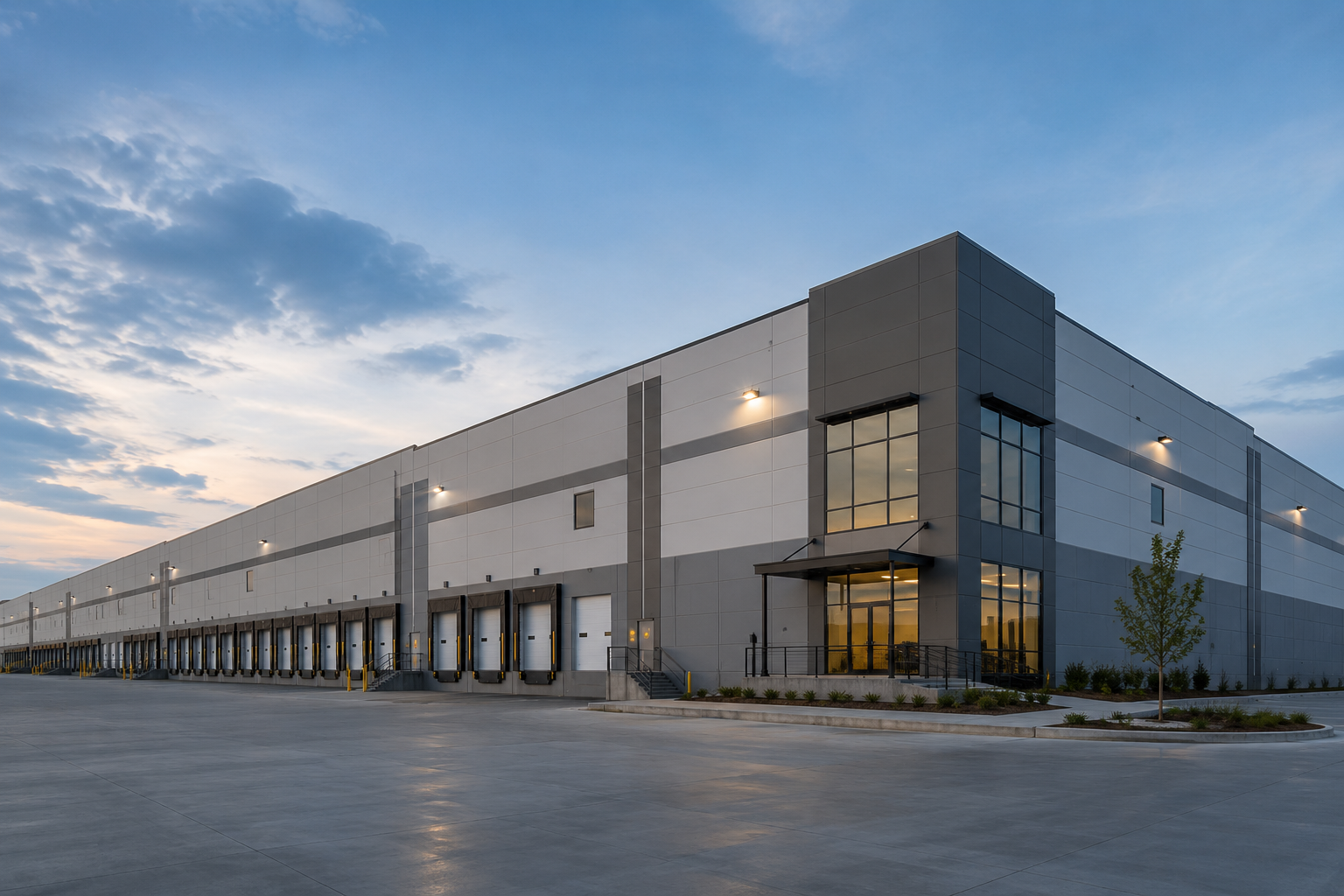
Industrial demand remains selective while retail fundamentals continue to benefit from disciplined supply and location-specific tenant demand. Both sectors continue to attract investor attention, but the strongest opportunities are increasingly tied to property quality, tenant profile, and the specific market fundamentals surrounding each asset.

For owners and investors, the current environment requires a more careful reading of demand. Broad assumptions about industrial strength or retail weakness are not enough. Some industrial assets continue to perform well, especially those with functional layouts and strong access to labor and transportation. At the same time, many retail centers are benefiting from resilient consumer services, food and beverage activity, medical users, and limited new supply.

Industrial demand is still active, but more selective

Industrial occupiers remain focused on efficiency. Tenants are evaluating clear heights, loading, trailer parking, power, access, and proximity to customers or distribution routes. Buildings that meet modern operational requirements continue to receive attention, while outdated properties may need more aggressive pricing or capital improvements to compete.

Investors are also paying close attention to lease terms and replacement cost. In markets where new development has slowed, well-located existing assets may benefit from limited future supply. However, underwriting remains disciplined. Buyers want confidence that rent growth assumptions, rollover risk, and tenant demand are supported by current market activity.

Retail strength is increasingly location-specific

Retail fundamentals remain stronger than many older narratives suggest. Service-oriented tenants, restaurants, grocery users, fitness concepts, and healthcare-related retailers continue to support demand in many trade areas. Properties with visibility, access, parking, and strong surrounding demographics are often better positioned than generic retail space.

Disciplined supply has also helped the sector. In many markets, limited new retail construction has reduced competitive pressure and helped existing centers maintain occupancy. Investors looking for yield may find retail opportunities attractive when tenant quality and location fundamentals are carefully evaluated.

Comparing opportunities across sectors

The attached placeholder report can be replaced later with the final market report file, but the strategic takeaway is already clear: value depends on the asset, not just the category. Industrial and retail properties can both offer compelling opportunities when the fundamentals are aligned.

Owners should review tenant demand, lease rollover, capital requirements, and local competition before making decisions. Investors should compare current income, future upside, and downside risk across both sectors. In a selective market, the best opportunities often come from understanding where sentiment and fundamentals are not fully aligned.

Retail Property vs. Industrial Property Investment for Finding Value

Commercial real estate investors are constantly searching for opportunities that offer strong returns, stable cash flow, and long-term appreciation. Two of the most popular asset classes in today’s market are retail properties and industrial properties. While both can be profitable investments, they respond to different economic trends and present unique opportunities for value creation.

Understanding the strengths and challenges of each asset type can help investors determine where the best value opportunities may exist in the current market environment.

The case for retail property investment

Retail real estate has experienced significant changes over the past decade. The growth of e-commerce has forced many retailers to adapt, leading some investors to question the long-term viability of brick-and-mortar locations. However, retail is far from obsolete.

Well-located retail properties continue to attract tenants that provide services and experiences that cannot be easily replaced online. Grocery stores, restaurants, fitness centers, medical users, and convenience retailers remain important drivers of consumer traffic.

One of the biggest advantages of retail investment today is pricing. In many markets, retail properties can often be acquired at higher capitalization rates than industrial assets, potentially providing stronger initial cash flow. Investors willing to carefully evaluate tenant quality and location may find attractive value opportunities in neighborhood shopping centers and service-oriented retail assets.

Retail properties can also benefit from population growth and residential development, particularly in suburban markets where consumer demand continues to expand.

The appeal of industrial properties

Industrial real estate has become one of the most sought-after asset classes in commercial real estate. The continued growth of e-commerce, supply chain modernization, and logistics demand have fueled significant investor interest in warehouses, distribution centers, and light industrial facilities.

Industrial properties often offer several advantages, including lower operating costs, longer lease terms, and simpler property management compared to many retail assets.

Demand for industrial space has remained strong in numerous markets, driven by companies seeking efficient distribution networks and last-mile delivery capabilities. As a result, vacancy rates in many industrial markets remain relatively low.

However, this popularity has also increased competition among investors. In some markets, industrial properties trade at lower capitalization rates, making it more difficult to find immediate value compared to retail opportunities.

Where investors may find the best value

Finding value is not always about choosing one asset class over another. Instead, it often involves identifying inefficiencies and opportunities within specific markets.

Retail properties may offer stronger value potential in locations where consumer demand remains healthy but investor sentiment remains cautious. Assets with strong tenants, favorable demographics, and opportunities for repositioning can provide attractive returns.

Industrial properties may offer value in emerging logistics corridors, secondary markets, or properties that can be upgraded to meet modern tenant requirements. Investors who identify markets benefiting from infrastructure improvements, manufacturing growth, or population expansion may uncover compelling opportunities.

The importance of market selection

Market selection often has a greater impact on investment performance than asset class selection alone.

A poorly located industrial property may underperform a well-positioned retail center. Likewise, a retail asset in a declining trade area may struggle despite strong overall retail trends.

Investors should evaluate local economic conditions, population growth, employment trends, transportation infrastructure, and tenant demand before making investment decisions.

Conclusion

Both retail and industrial properties can offer attractive opportunities for investors seeking value. Retail assets may provide higher initial yields and opportunities created by changing market perceptions, while industrial properties continue to benefit from strong demand and long-term economic trends.

The most successful investors focus on identifying the right property in the right market rather than relying solely on asset class preferences. By carefully evaluating local conditions, tenant quality, and future growth potential, investors can uncover value in both retail and industrial commercial real estate sectors.